From estimate to paid
StudioLedger keeps commercial estimates, approvals, production costs, invoices, payment schedules, and collections inside one financial history for the Job.
Start with scope the client can understand
Reusable line items, terms, taxes, usage, expenses, and payment expectations give an estimate enough structure to explain the assignment without rebuilding the same document every time. The estimate remains connected to the client, company, and Job that produced it, so approval is the beginning of the financial history rather than a detached PDF.
Clients can review and approve the estimate online, sign where required, and complete an eligible deposit step. The studio sees the decision in the same record, including who acted and when, instead of interpreting an email reply and manually changing the status later.
Keep one production even when the money has several parts
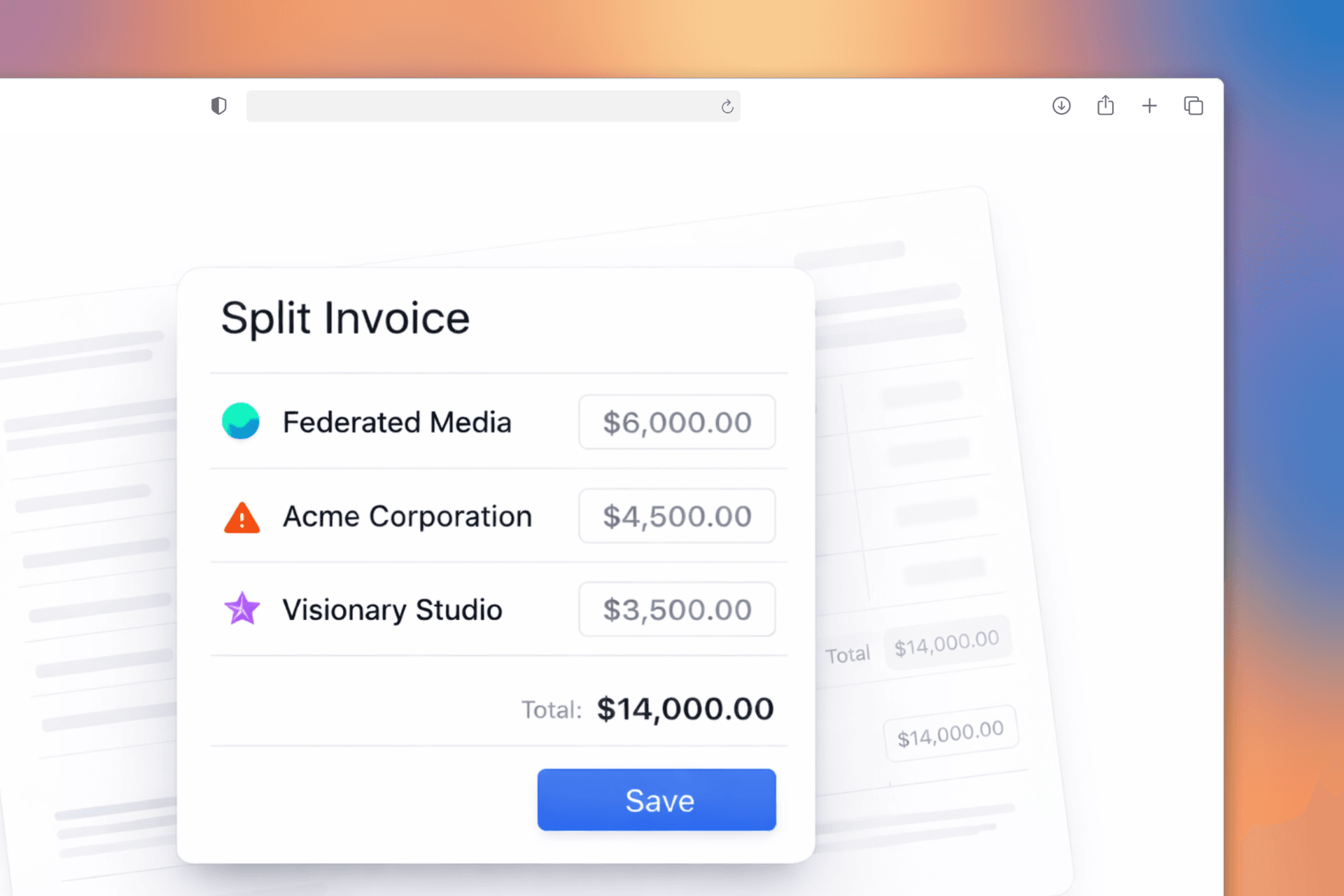
Commercial work often has deposits, production milestones, final balances, reimbursable expenses, or several parties sharing responsibility. Payment schedules divide the total into clear obligations without inventing a separate job for every due date. Cost sharing can assign portions of one approved production to different responsible parties while preserving the whole.
An invoice can continue from the approved work, and every payment reduces the balance that requested it. StudioLedger can record online payments through the studio's connected Stripe account as well as checks, transfers, credits, and other payments received outside checkout. The Job retains the collected, outstanding, and overdue truth.
Actual costs belong beside the approved numbers
Receipts and expenses stay with the production they affected. The studio can separate direct job costs from overhead, compare budget to actual, and understand why a profitable-looking estimate became a thin result after crew, rental, travel, or post-production changed.
That operational history feeds revenue, expense, tax, and profit views without a second spreadsheet. A supported QuickBooks connection can keep configured customers, invoices, payments, and expenses aligned after the studio completes its mappings and enables sync. StudioLedger remains the operational system; it does not claim to replace the formal accounting system or every ledger workflow.
Questions photographers actually ask
Can a client approve an estimate online?
Yes. The client can review the scope, approve the estimate, provide the required signature, and complete an eligible deposit step from the client-facing document.
Can one production have several payers or milestones?
Yes. Cost sharing assigns responsibility among parties, while payment schedules divide the total into deposits, milestones, and a final balance without breaking the Job apart.
What does StudioLedger send to QuickBooks?
A supported, configured connection can synchronize mapped customer, invoice, payment, and expense records. Availability depends on the QuickBooks company, authorization, mappings, and enabled sync settings.