Everything works together
StudioLedger connects the client, Job, finances, production details, gallery, delivery, and history so each feature knows what the rest of the studio is doing.
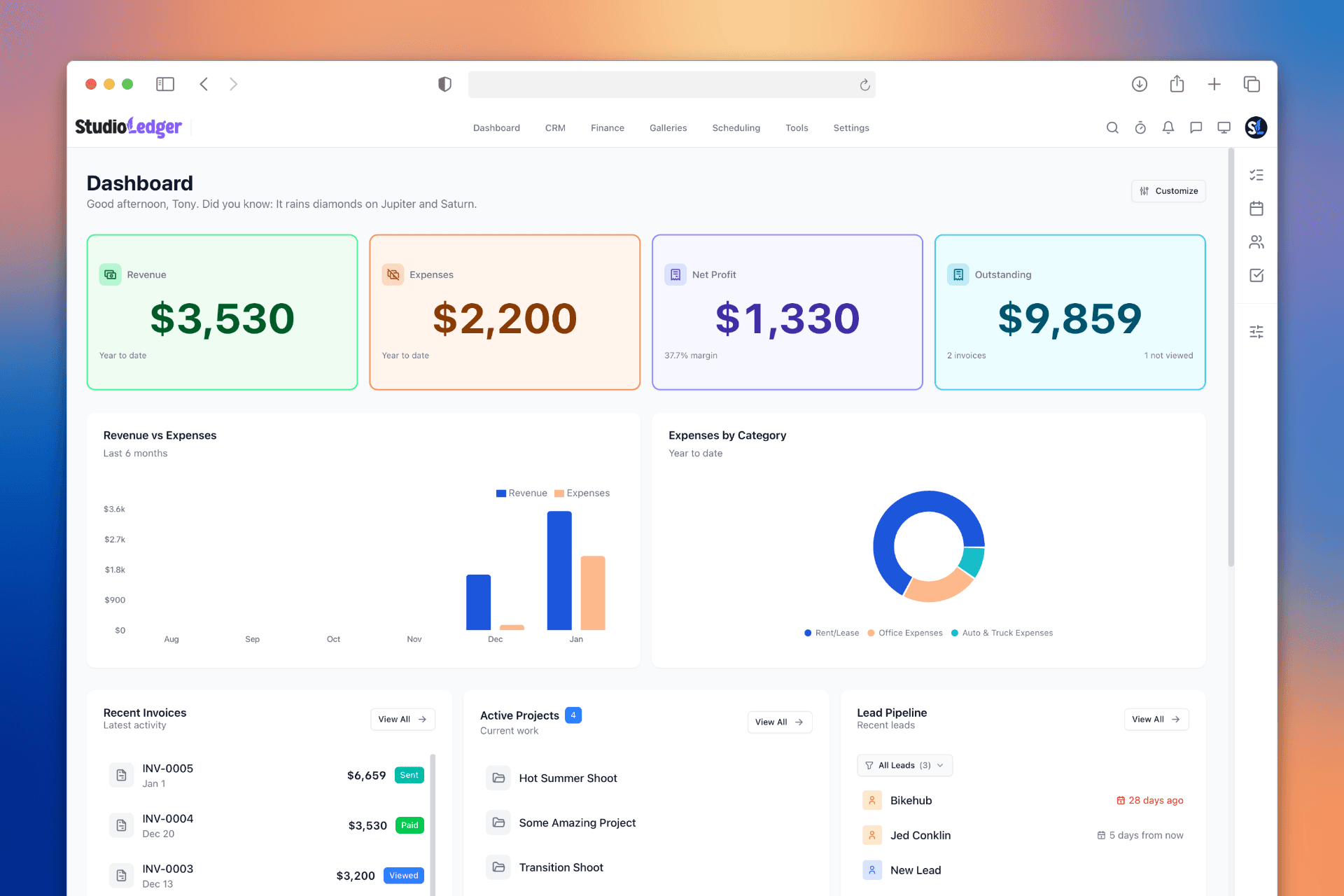
A Job is the thread through the work
A commercial assignment starts before an invoice and continues after shoot day. The inquiry, company, contacts, approved scope, production schedule, call sheet, expenses, gallery, usage, payments, and delivery all describe the same piece of work. StudioLedger keeps that continuity instead of asking the studio to recreate it in every module.
The Job becomes the dependable place to answer what was promised, who approved it, what changed, what it cost, what the client reviewed, and what was delivered. Each feature remains focused, but the records around it already know which client and production they belong to.
Features become more useful when they share context
An approved estimate can continue into production and billing. A company can own the financial relationship while the correct contacts receive the call sheet or gallery. Expenses and time can stay with the Job they affected. Client feedback can remain beside the image rather than becoming a filename list in email.
That shared context reduces duplicate entry, but the larger benefit is confidence. The studio is not comparing five versions of the client name or wondering whether the PDF in a folder reflects the latest approval. The current record is already connected to the next action.
The history remains useful after delivery
Months later, the important question is rarely where a file was saved. It is which usage was granted, who paid which share, what the production actually cost, whether the client selected a final image, and when a license expires. StudioLedger keeps those answers in the same history that created them.
That history makes the next estimate, renewal, client conversation, and production plan better. The product is broad because a studio is broad, but the point is not the number of screens. The point is that the studio can move from first contact to final delivery without losing the story of the work.
Everything in StudioLedger
One plan includes the whole connected studio. Choose any feature to read the full story behind it.
CRM & Client Management
- Contact Management
- Organize clients, vendors, and collaborators in one place
- Company Records
- Link contacts to agencies, brands, and production companies
- Project Tracking
- Track productions from inquiry through final delivery
- Lead Pipeline
- See and move incoming opportunities through your sales process
- Portal Permissions
- Control which company contacts can see each client-facing item
- Contact Import
- Bring contacts in from CSV or vCard files without retyping them
Questions photographers actually ask
Does StudioLedger replace every specialist tool?
It replaces the disconnected studio-management layer around the work. Specialist creative tools can remain, while StudioLedger keeps the client, production, financial, and delivery context connected.
What is the difference between a Project and a Job?
Projects organize the ongoing client work and production context. Jobs hold the financial lifecycle, including estimates, invoices, expenses, payments, and production reporting, without losing the project relationship.
Can clients see internal studio information?
Only the client-facing records and permissions intended for them are exposed. Internal notes, margins, team discussions, and administrative controls stay inside the workspace.